

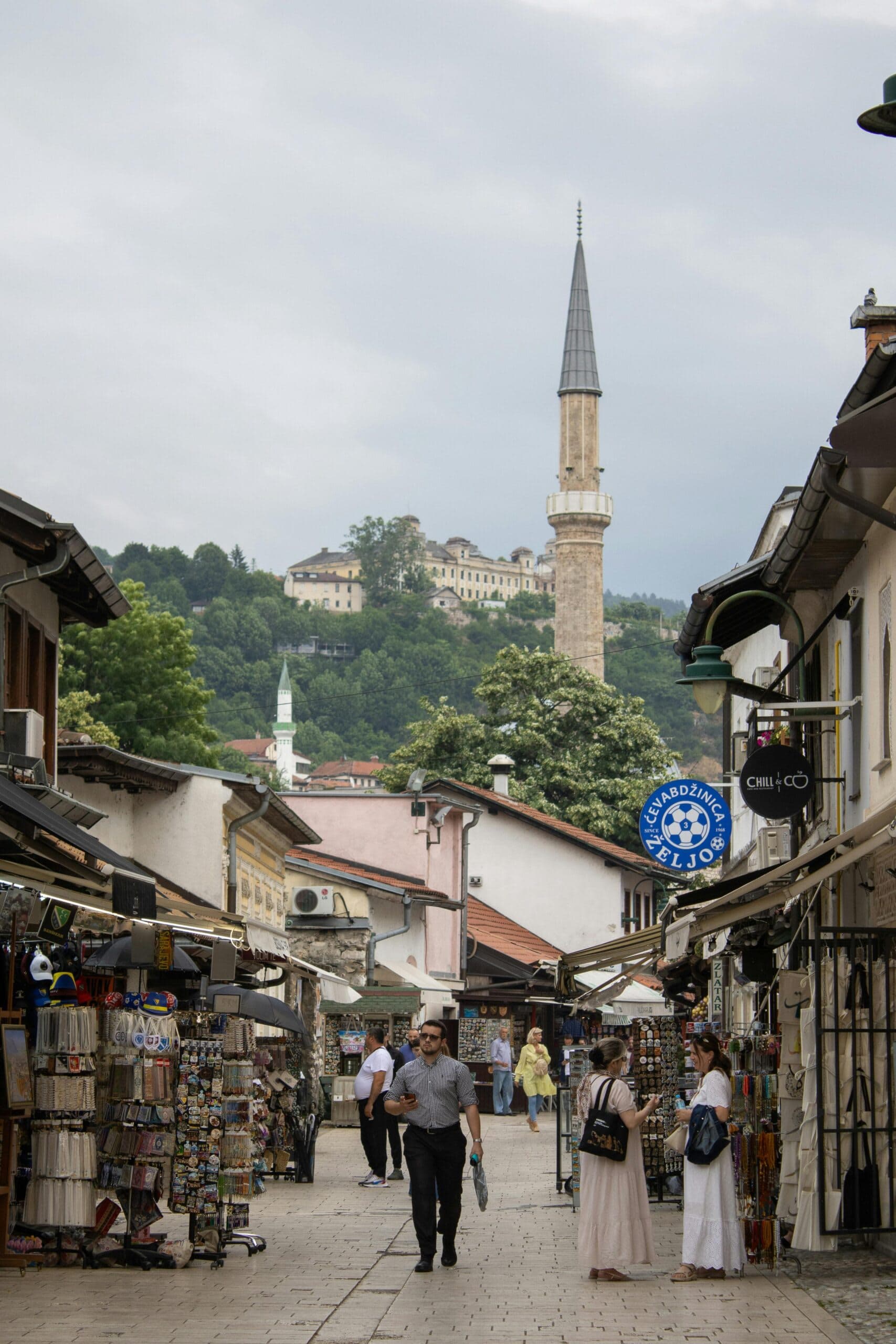
Ijust left Serbia and decided to head to Sarajevo, Bosnia and Herzegovina. Yesterday broke my heart.
I visited the Museum of Genocide in Sarajevo, and I left shaken. I couldn't stop crying. The air inside felt heavy, like it carried the grief of thousands. It drained me. Completely.
01The Museum That Broke Me
I walked through rooms filled with chilling evidence ~ videos, photos, documents. Actual footage of children being shot. Letters from victims. Records of cruelty that no human should ever be capable of.
How could people who once shared neighbourhoods, friendships, even family ties ~ turn on each other like this?
Bosniaks, Serbs, Croats ~ different religions, but the same South Slavic roots. The same land. The same language. The same bloodlines. And yet, war carved a deep divide between them.
02The Cost of Fear and Propaganda
What stood out to me most wasn't just the horror of the genocide, but the deep fear and trauma that came before it. The fear of being erased. The inherited pain from atrocities like those at Jasenovac ~ a Nazi-aligned concentration camp in WWII ~ left psychological scars, especially among the Serbs.
Instead of healing, that pain metastasized. Manipulated by propaganda. Used by power-hungry leaders to pit neighbour against neighbour.
Hurt people can hurt others ~ especially when they are told they must, in order to survive.
“Division is rarely born from nowhere. It's built ~ slowly ~ through pain, fear, manipulation, and silence.”
03Seeing the Present With the Past
Today in Bosnia, the divisions still quietly linger. Bosniaks are Muslim. Serbs are Orthodox. Croats are Catholic.
And yet, beneath those labels ~ they are still one people. One race. I see them on the streets, in cafes, living their lives, side by side. But I also feel the weight of everything unspoken.
They don't just carry the trauma of the war. They carry the weight of being misunderstood by the rest of the world. Often reduced to headlines, simplified into villains, or dismissed as “just another conflict zone.”
But they're not. They are people who've endured more than many of us can imagine.
04How Do We Tell Stories Fairly
I ask myself that a lot. I'm not from here. I'm a visitor. So what right do I have to write about this?
But I believe that witnessing comes with responsibility. And part of that responsibility is to tell the truth with empathy. Not just for the victims, but even for those whose actions we struggle to understand.
Empathy doesn't mean excusing. It means looking deeper. It means recognising that division is rarely born from nowhere.
These aren't questions with answers. They're questions worth holding.
Eyeswide open.
I don't have the answers. But I know that if we only see one side, we risk repeating the same mistakes.
I leave that day with a broken heart, but also with eyes wide open. More than ever, I believe that healing can only begin when we choose to see all sides, name the pain, and refuse to inherit the hate of the past.
Love from a curious soul, Abie
Share this post